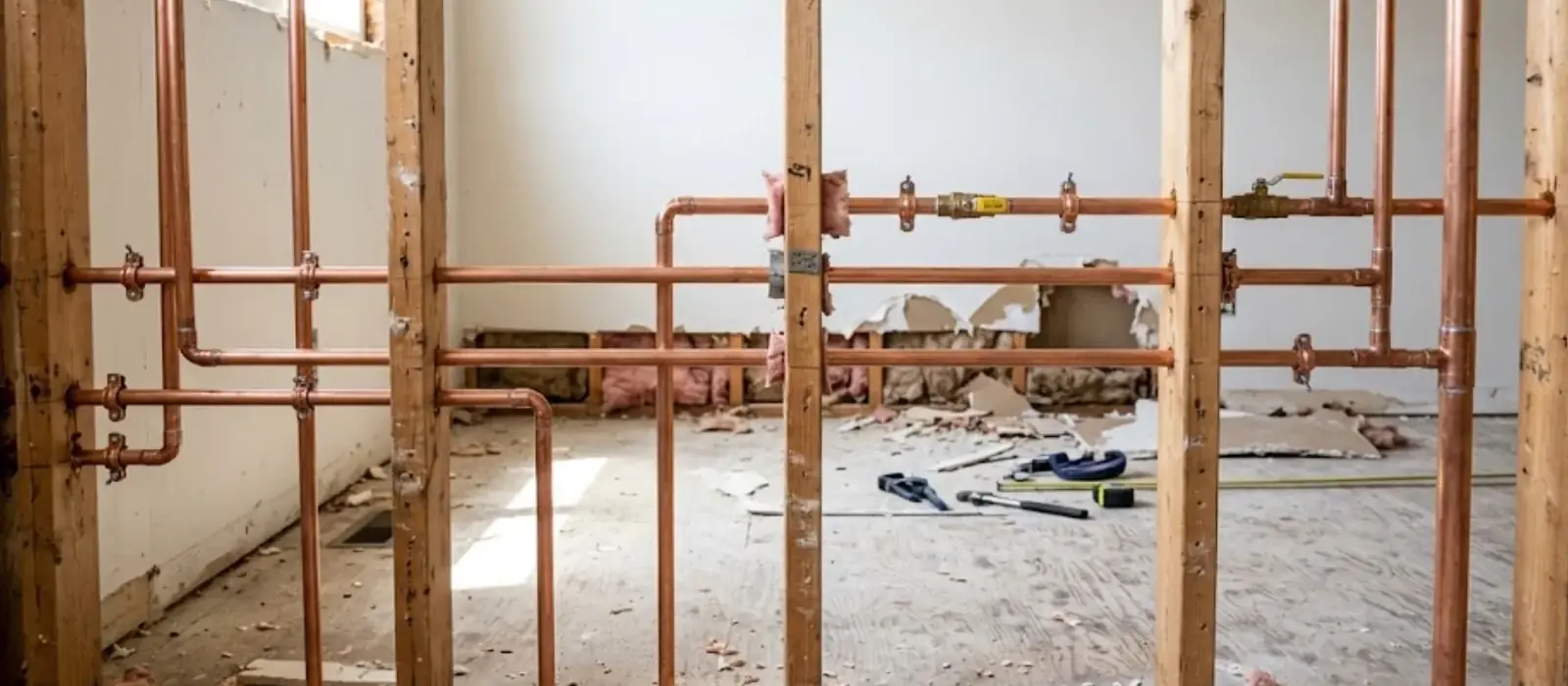
When patching stops making sense
A single leak in a sound system is a repair. Three leaks in a year is a pattern. The pipe is thinning from the inside, and each repair simply moves the failure to the next weak point.
We look at pipe material, age, leak history and pressure before recommending anything. If the system is mostly sound, we say so and repair the leak. If it is failing along its length, a repipe is the better spend. NSF/ANSI 61 is the standard for pipe that carries drinking water, so we check that the pipe we install carries it.
Signs your pipes may be at the end
- Repeated pinhole leaksCopper or galvanized pipe thinning in multiple spots.
- Brown or orange waterCorroding galvanized pipe releases rust.
- Low pressure that worsensMineral and rust buildup narrows the pipe.
- Visible green or white crust on pipesCorrosion on copper fittings.
- Pipes of an unreliable typeSome old plastic pipes are known to fail and are worth asking about.
Pipe materials
Each material has strengths and limits.
| Material | Strength | Consideration. |
|---|---|---|
| PEX | Flexible, fewer fittings, quick to run | Not for outdoor sun exposure. |
| Copper | Long track record, sturdy | Higher cost, can pit in some water. |
| CPVC | Cost effective, rigid | Can become brittle with age. |
| Galvanized | Found in older homes | Corrodes inside and restricts flow. |
How a repipe project runs
Inspect and plan
We map the existing lines and decide on a route.
Rough in new lines
We run new pipe through walls, attic or crawl areas.
Connect and test
We tie into the meter and fixtures and pressure test.
Patch and finish
We patch access holes and leave the home ready for paint.
What living through a repipe is like
Most whole-house repipes take a few days, and water is off for part of that. We plan access holes in closets and low-visibility spots. Drywall patching is part of the plan, though final paint is usually left to you.
Because we avoid cutting concrete, a repipe often routes through the attic or walls. If a slab leak started the discussion, see slab leak repair for the reroute option.
Ready to plan?
Call and we will schedule a look at your pipes.
Repiping and Palm Beach Gardens housing eras
Palm Beach Gardens began with John D. MacArthur's 1959 announcement, so its houses span more than six decades of plumbing practice. Homes from the early decades may have galvanized or copper lines, while homes from later decades often have copper or CPVC.
Rather than guess from the year, we check the pipe where it enters the house and at accessible points. That tells us what we are dealing with, and it gives you something concrete to compare against any other quote.
What affects repiping cost
Whole-house work is priced after we see the house.
Warranty and paperwork
Ask what warranty applies to the pipe and to the labor. Keep the permit record, the pressure test results and the manufacturer information for the pipe. If you sell the house, these documents show the work was done properly.
We provide a written scope before the work, so you know what the warranty covers and who to call if something shows up later.
Questions we hear most
Many homes take a few days. Size, access and finish work affect the schedule.
Often yes, with water off for part of the day. We plan that with you.
Repiping is planned work, but our 24/7 line at (561) 448-8545 is open for any burst or leak while a plan is made.
Both work. PEX is faster and flexible. Copper is traditional and sturdy. We discuss your situation.
Permit rules vary, so ask the building division. We explain what we know.
Sometimes. If only one branch is failing, we can replace that part.