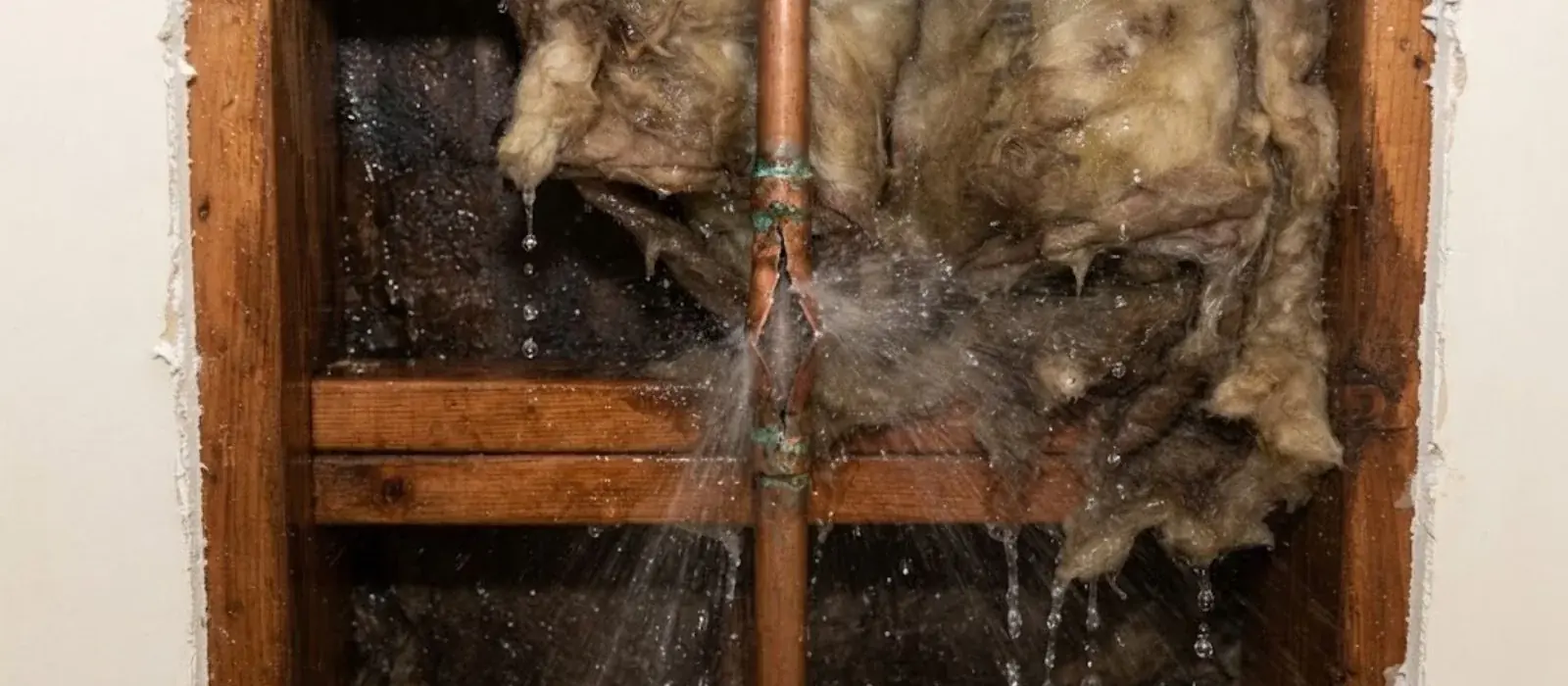
Water everywhere: first five minutes
Burst pipes can flood a home quickly, and water can reach outlets and fixtures. The priority is the water supply, then the electrical safety of the area.
Do not wade through standing water near outlets or appliances.
- Close the main water valve at the house, usually near the front hose bib or inside the garage.
- If water is near electrical outlets, switch off the breaker for that area only if you can reach it dry.
- Open a low faucet to drain remaining pressure from the lines.
- Call the 24/7 line and tell us where the water is coming from and whether the main closed.
Take photos and short videos before cleanup. They help with any insurance claim.
Why pipes burst in South Florida
Hard freezes are not common here, but cold fronts occasionally bring lows into the 30s and 40s, and an exposed pipe or a hose bib can fail in a cold snap. Most bursts here come from other causes: corrosion, high pressure, a failed fitting or a pipe damaged during construction work.
Water pressure above about 80 psi strains pipes and fixtures. A pressure regulator and gauge cost little compared with a burst, and we check pressure during repairs. ASTM standards cover PEX, CPVC and copper tube, and we use fittings listed for the pipe that is actually in your wall.
Where bursts happen and what we do
| Location | Common cause | Typical fix. |
|---|---|---|
| Wall or ceiling | Corrosion or a failed fitting | Cut access, replace the section, patch-ready. |
| Under the slab | Pinhole or abrasion | Locate and spot repair or reroute. |
| Yard line to the house | Root or digging damage | Excavate and replace the section. |
| Exterior hose bib | Cold or impact | Replace the bib and shutoff. |
| Attic line | Heat and age | Replace the section and check insulation. |
For leaks under the floor see slab leak repair.
How repair proceeds
Stop and isolate
We shut off the section so water stops and the rest of the house keeps pressure.
Open access
We cut the smallest opening that lets us work.
Repair or replace
We replace the failed section with appropriate pipe and fittings.
Test
We pressure test the repair before closing the wall.
Water still running?
Call now. We will guide you to the shutoff while we dispatch.
Pipe materials and repair
Copper, PEX, CPVC and galvanized steel each need different fittings. Mixing metals can cause corrosion, so we use the correct transition fittings. Older galvanized pipe often fails in several places, which is when a repipe makes more sense than patching.
If one burst is the third failure on the same line, we recommend looking at repiping instead of repeated repairs.
After the repair: drying and next steps
Once the water stops, wet drywall and flooring need to dry within a day or two to avoid mold. A restoration contractor can dry the structure, and your insurer can tell you which firms they work with.
We do not do structural drying ourselves, so we tell you plainly when a restoration company should be called. We make the plumbing safe and leave notes for your adjuster.
What affects burst pipe repair cost
A burst can be a quick fix or a larger repair.
Questions we hear most
Yes. The 24/7 line at (561) 448-8545 is answered at all hours and we dispatch a plumber the same day when a slot is open.
It is often near the front hose bib, in the garage, or at the meter box at the street. Find it before you need it.
Only if you can reach the panel without standing in water. If in doubt, call the electric utility, FPL at 800-468-8243.
Sudden bursts are often covered for water damage. Ask your agent about the pipe repair and access cost.
Yes, when the rest of the pipe is sound. If it is old and failing, see repiping.
Many repairs finish in hours. Larger ones take longer. We tell you at the visit.