What to do when a clogged drain is an emergency
A drain is an emergency when wastewater has nowhere else to go. Several fixtures backing up at once points to the main line, and that blockage only gets worse as the household keeps using water.
Standing water in a shower after the toilet is flushed is the classic sign. So is a floor drain that bubbles when the washing machine drains.
- Stop using water everywhere in the house, including the dishwasher and washer.
- Do not pour drain cleaner into a backed-up line. It sits in the pipe and burns whoever opens it next.
- Move rugs and electronics away from any floor drain or low bathroom.
- Call the 24/7 line and tell the dispatcher which fixtures are affected.
If sewage is reaching living space, keep children and pets out of the room and leave windows open. A plumber can then clear the line while you document the damage for your insurer.
Signs the clog is in the branch or the main
Where the water backs up tells us a lot before anyone opens a cleanout.
- One fixture drains slowlyA single kitchen sink or bathroom lavatory is usually a branch clog close to the trap. Cabling from the fixture normally solves it.
- Two or more fixtures back up togetherWater from a washer showing up in a floor drain or a tub means the shared line downstream is restricted.
- Gurgling toilets after other fixtures runAir is being pushed back through traps because the line cannot take the flow.
- Repeat clogs every few weeksGrease, scale or a root intrusion is building. A camera shows which one before anyone guesses.
Kitchen sink clogs and what actually causes them
Kitchen lines carry grease, coffee grounds and food fibers, and they cool into a paste on the pipe wall. A kitchen branch that has been slow for months often needs more than a plunger. We cable it, then flush with hot water to confirm the pipe is open down to the main.
If the sink drains into a garbage disposal, we check the disposal outlet and the trap arm first. Garbage disposal repair is a separate call when the unit itself is jammed or leaking. Model plumbing codes such as the IPC and UPC both expect fixture traps to be vented, so a drain that gurgles after cabling also gets a vent check.
How we find the blockage and clear it
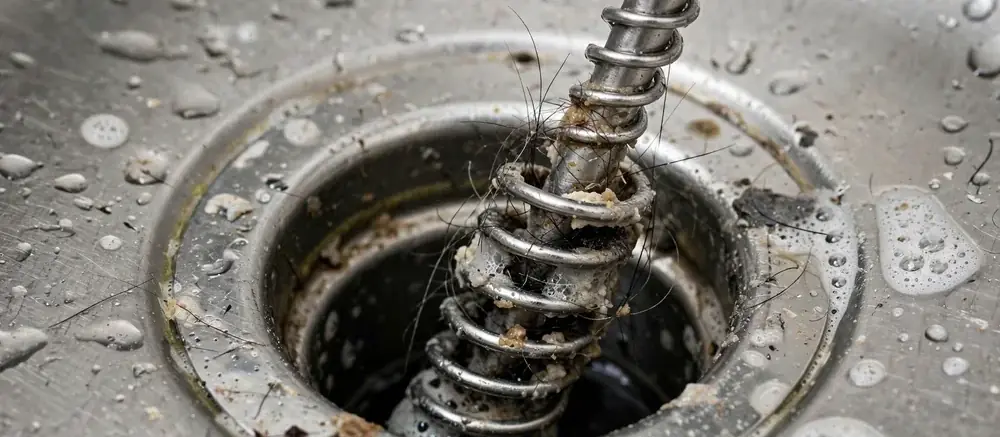
Cabling is the first tool. A motorized cable with the right cutting head clears hair, paper and soft debris from a branch line, and we feed it until the resistance changes. For a stubborn clog we run a drain camera to see what is there instead of guessing.
The camera shows whether the pipe is full of grease, offset at a joint, crushed, or full of roots. That matters because the fix differs. Cabling cannot repair a sagging section, and jetting cannot straighten a collapsed one.
When a line keeps clogging after cabling, hydro jetting scours the pipe wall with high-pressure water. If the camera shows a broken or sagging pipe, we explain the repair path under sewer line repair.
Cable, camera or jetter: which fits your clog
Tools match the problem. This is how we choose between them.
| Situation | Best first tool | What it clears | What it will not fix. |
|---|---|---|---|
| One slow sink or tub | Hand or drum cable | Hair, soap, soft debris | A cracked or sagging pipe. |
| Repeat kitchen clog | Cable plus camera | Grease, food paste | A collapsed section. |
| Several fixtures backing up | Main-line cable and camera | Blockage in the shared line | Roots grown through a joint. |
| Clog returns within weeks | Camera then jetting | Scale, grease, fine roots | A belly that holds water. |
If the first option fails, the next one is the logical step, and we say so before changing tools.
What drain cleaning looks like in Palm Beach Gardens homes
Palm Beach Gardens grew from John D. MacArthur's 1959 plan into a city of more than 59,000 people by the 2020 census, and its homes span several building eras. Older houses from the early plan years can still carry cast iron or clay drain lines, which collect scale and roots over decades.
Newer communities built later use plastic drain pipe that is smoother, so their clogs lean toward grease and wipes. Seacoast Utility Authority tells its customers on its own website not to flush wipes, because they clog sewer lines and damage pumps. That advice applies to your home drain as well, so keep wipes out of toilets even when the package says flushable.
The first question we ask on a call is the year and layout of the house. It tells us whether to expect a belly in an old line or a wipe snag in a newer one.
Drain backing up at night?
Our 24/7 line is open. One call dispatches a plumber with cable and camera.
What changes the price of drain cleaning
Price depends on what we find, so we quote after we know the cause. These are the factors that move it.
What happens on a drain call
Call and triage
You describe the fixtures that are affected and we dispatch.
Locate
We find the cleanout and confirm where the line is restricted.
Clear
We cable the line and use the camera when the cause is unclear.
Prove
We run water to confirm flow and explain any repair we saw.
Other drain problems we see
A drain line that leaks under a slab or inside a wall is a different problem than a clog, and a camera and pressure test tell them apart. We also clear shower and tub drains where hair and soap have formed a plug. Floor drains in garages and laundry rooms collect lint and sediment and are cleared the same way.
If you suspect a leak behind a wall, read about leak detection before cutting any drywall.
Questions we hear most
Yes. The 24/7 line at (561) 448-8545 is answered nights, weekends and holidays, and we dispatch a plumber the same day when a slot is open. Describe which fixtures are backing up so the right tools are on the truck.
We advise against it. Caustic products can sit in a stopped pipe and harm skin and fixtures, and they rarely clear grease or roots. A plunger is fine, and a cable is better.
Grease cools and coats the pipe wall, and food fibers catch on it. A camera shows whether the line is coated or damaged, and jetting resets the pipe if it is coated.
Yes, when the cleanout is accessible. If there is none, we can work through a toilet or a roof vent, and we may suggest installing a cleanout so future service is simpler.
Sometimes. A dry trap or a vent problem can cause odor without a clog. We check traps and venting as part of the visit.
If the camera shows a crushed section, a belly holding water or roots through a joint, cleaning only buys time. We then explain the repair options on our sewer line repair page.