Why a cable only helps for a while
A cable punches a hole through a blockage, but it leaves the coating on the pipe wall. In a kitchen line that coating is grease. In an older cast iron or clay line it is scale and fine roots. The hole fills in again, and the clog returns.
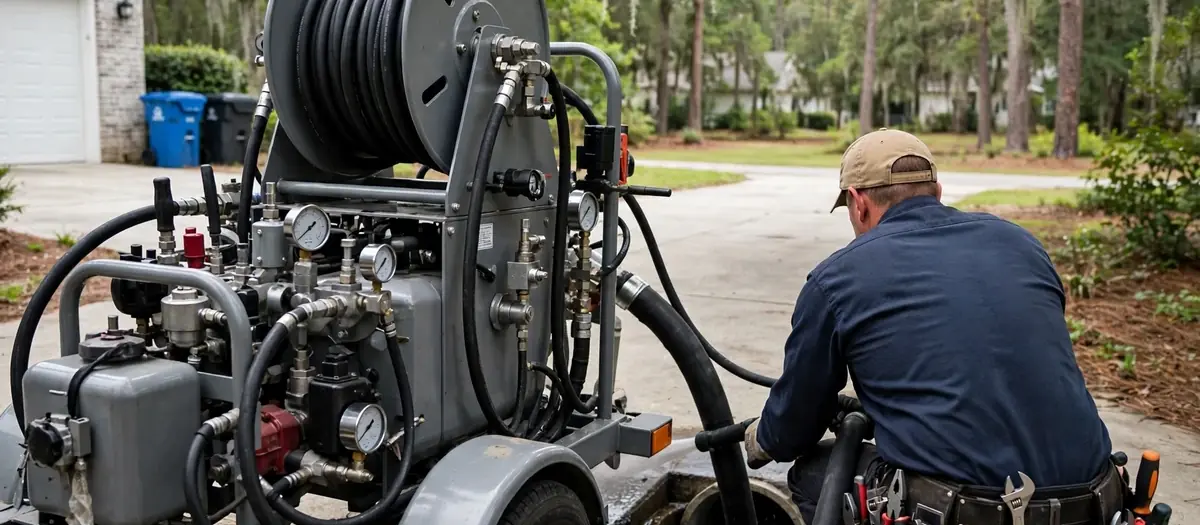
Hydro jetting works differently. A nozzle sends water backward and forward at high pressure, and the spray strips the wall clean along the full length of the run. The pipe returns closer to its full diameter, which is the real fix for repeat clogs. Jetting equipment makers publish pressure and nozzle guidelines by pipe type, and we follow those guidelines instead of using full pressure on every line.
What to do when a repeat clog becomes an emergency
A line that backs up the same week you had it cabled is reaching the point where the house cannot drain. Jetting can often be done on the same visit once the camera confirms the pipe can take pressure.
If wastewater is already entering the home, call first. We can stabilize the line and explain whether jetting is safe for that pipe.
- Stop using water in the house to avoid pushing more wastewater into the line.
- Keep people and pets out of any room with standing sewage.
- Note which fixtures back up and in what order, because that points to where the blockage is.
- Call the 24/7 line and ask whether the camera can go first.
We never jet blind. The camera confirms the pipe material and condition before any pressure is applied.
What a jetting visit includes
A good jetting job is camera-first and camera-last.
Camera first
We inspect the line to see grease, roots and any cracks or offsets.
Choose the nozzle
Different nozzles cut roots, scour scale or flush debris downline.
Jet the full run
We work from the cleanout toward the main and back, controlling pressure to match the pipe.
Camera last
We record the clean line and flag anything that needs repair.
Lines that benefit most from jetting
- Restaurant and commercial kitchen linesGrease builds fast on kitchen branches. See our notes on commercial plumbing for grease handling.
- Older cast iron or clay drainsScale narrows the pipe over decades, so the cable opens a hole in a thick coating.
- Lines with fine root hairsRoots enter at joints and keep growing back unless the wall is cleaned and any joint defect is repaired.
- Long runs to the streetA long lateral collects debris that a short cable cannot reach.
Jetting versus cabling versus repair
Not every problem is a jetting problem. This table shows where it fits.
| Problem | Cabling | Jetting | Repair. |
|---|---|---|---|
| Single soft clog | Usually enough | Not needed | No. |
| Grease-coated pipe | Short relief | Best cleaning | Only if damaged. |
| Fine roots at joints | Cuts roots | Cleans after cutting | Fix the joint to stop regrowth. |
| Collapsed or offset pipe | Cannot pass | Not safe | Required. |
If the camera shows a defect, we explain it and point you to sewer line repair.
Storm drains and yard drains
Palm Beach Gardens averages about 66 inches of rain a year on roughly 113 days, according to climate summaries of the city. That much rain pushes leaves, sand and mulch into yard drains and french drains and can stop them up. We jet yard and storm-style lines to restore flow, which matters before the wet months when water needs a clear path away from slabs.
Hurricane season in South Florida also leaves debris behind. A jetted and camera-checked line is a good thing to have done before storm season starts, not after.
Same clog, third time this year?
Call and ask for a camera and jetting visit. We confirm the pipe first.
What affects hydro jetting cost
We price jetting after the camera shows the line, because pipe length and condition decide the work.
Is jetting safe for my pipes
Hydro jetting is safe on sound pipe, and the camera tells us whether the line is sound. We do not jet a pipe that is cracked, belled out or collapsed, because pressure could make a break worse.
When the camera shows damage, we say so plainly and point to repair options. When it shows a clean-walled line with a single blockage, we may only need a cable. Telling you which is the point of looking first.
Questions we hear most
Yes. Our 24/7 line at (561) 448-8545 takes calls nights, weekends and holidays. When a line is backing up into the home, we dispatch a plumber the same day when a slot is open, then confirm with a camera whether jetting is safe.
A snake clears a blockage, while a jetter cleans the pipe wall. Jetting restores more of the pipe diameter, so clogs tend to stay away longer.
It can on a fragile line, which is why the camera comes first. We choose pressure and nozzle for the pipe we see.
Yes, from a cleanout when one is accessible. We then record the camera view afterward.
It depends on the building and its habits. A camera view tells us how fast buildup returns, and we recommend an interval based on what we see.
Yes. Rain brings sand and leaves into yard drains, and jetting restores flow. See drain cleaning for indoor lines.