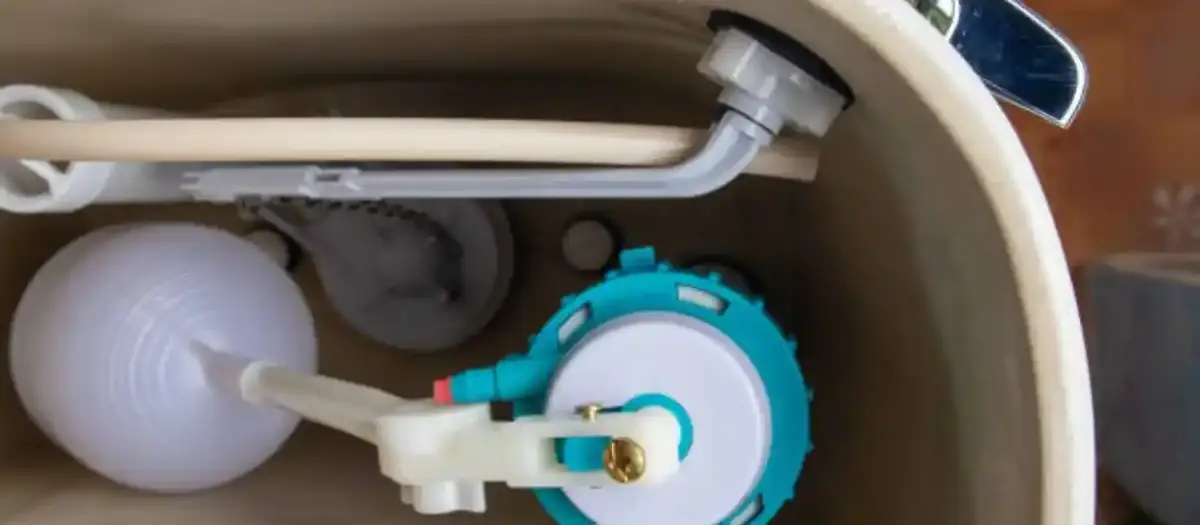
Overflow about to happen
A toilet rising toward the rim can spill within a minute. Acting right away saves your floor.
Do not flush again hoping it will clear.
- Remove the tank lid and push the flapper down to stop the water from entering the bowl.
- Close the valve behind the toilet by turning it clockwise.
- Put towels around the base and stop other water use.
- If water keeps rising, call the 24/7 line.
A bowl that stays high but does not rise is a plunger job. A bowl that fills and another fixture backs up is the main line.
How to plunge
Use the right plunger
A flange plunger with a rubber extension seals the toilet drain better than a flat cup.
Seal and push
Place it over the opening and push gently first to push out air.
Pump firmly
Pump up and down for fifteen to twenty seconds, keeping the seal.
Check the drain
If water drops, flush once to test. If not, repeat.
What not to do
- Do not use chemical drain cleanersThey sit in the bowl and burn skin or fixtures.
- Do not flush repeatedlyEach flush adds water.
- Do not use a wire hangerIt scratches the porcelain.
- Do not force a drain snake blindlyYou can scratch or crack the toilet.
- Do not ignore recurring clogsThey suggest a deeper issue.
Where the clog likely is
| Sign | Likely location | Next step. |
|---|---|---|
| Only this toilet clogs | The trap or short branch | Plunge or auger. |
| Toilet and tub both slow | The shared branch | Call for cabling. |
| Several fixtures back up | The main line | Call. See sewer line cleaning. |
| Frequent clogs after wipes | Wipes in the line | Stop flushing wipes. |
Flushable wipes and the local utility
Seacoast Utility Authority tells customers not to flush wipes, even those labeled flushable, because they clog sewer lines and damage pumps.
That is also the number one preventable cause of toilet and drain clogs at home. Trash can, not toilet.
Overflowing toilet in North Palm Beach? Call the same 24/7 line.
Source type: Seacoast Utility Authority customer guidance.
Why toilets clog repeatedly
An old low-flow toilet may lack the flush power to move waste. Wipes, paper towels and feminine products do not break down. A partially blocked drain or a tree root in the sewer line can slow every flush.
If the problem repeats, a camera shows whether the pipe or the toilet is at fault. See drain cleaning for that. The utility's guidelines are simple: only toilet paper and human waste belong in a toilet.
When to call
Call if plunging fails after a few tries, if other fixtures are involved or if there is any sign of sewage. Our team can auger the toilet or camera the line. We also install new toilets, covered on our toilet page.
Cleanup
Wear gloves and wash surfaces with a disinfectant. Dry the floor completely. Soft materials soaked with sewage water usually need to be discarded.
Using an auger without hurting the bowl
A closet auger is a short snake with a protective sleeve. Place the curved end in the bowl opening, crank the handle and feed the cable gently. When you feel resistance, work the head back and forth to break up or hook the blockage.
Retract slowly and wipe the cable. Then flush once to test. If water drops slowly, the clog may be farther down, and a longer cable or a camera is the next step.
Preventing the next clog
- Use less paperOverloading the bowl is a simple cause.
- Keep wipes outTrash them, even if the package says flushable.
- Mind children's toys and productsSmall items get stuck in the trap.
- Check the flapper and fill levelA weak flush leaves waste behind.
- Schedule a camera checkDo this if clogs repeat monthly.
How a plumber thinks about a stubborn toilet clog
We start by asking whether the clog is in the toilet or in the line behind it. A toilet clog usually clears with a plunger or an auger. A line clog shows up in more than one fixture, and the toilet is simply the lowest or weakest outlet.
If a toilet clears and clogs again the same day, we look at the vent and the line with a camera. A poor vent can leave a toilet with weak flush action even though nothing is stuck in it.
Pulling the toilet when nothing else works
If an auger cannot reach the obstruction, the toilet may need to come off the floor so we can clear it from the flange side. A small toy or a hard object lodged in the trap can only be retrieved that way. We set the toilet back with a new seal and test it.
This is also the moment we check the flange and the floor, so any hidden damage is found and fixed before the toilet is reset.
Quick answers
For most single clogs, yes.
Some people try it. A plunger is more reliable.
When several fixtures are affected.
If it overflows or sewage backs up, yes.
Our 24/7 line at (561) 448-8545.
The local utility asks customers not to flush wipes at all, because they clog sewer lines and damage pumps.