Start with the utility report
Seacoast Utility Authority publishes a yearly water quality report. The 2025 report says its supply comes from wells and is treated at the Hood Road Membrane Water Plant by nanofiltration and low-pressure reverse osmosis, then disinfected with chloramine.
Because the water is already membrane treated, many residents find little need for heavy-duty treatment. The report lists no hardness figure, so test your tap if scale worries you. NSF/ANSI 42 covers taste and odor claims, 53 covers health-related claims and 58 covers reverse osmosis, so check which standard a filter lists.
What the 2025 report lists
The utility's 2025 report lists 38 surficial wells and 6 Floridan wells as sources, treated at the 30.5 million gallon per day Hood Road plant. It reports sodium at 35.5 ppm for a 2023 sample against a limit of 160 ppm.
It does not list hardness or pH, so we cannot tell you those numbers. Ask the utility or test your tap.
Condo owners in North Palm Beach should ask their association the same questions.
Source type: Seacoast Utility Authority 2025 consumer confidence report.
What different filters do
- Carbon filterReduces chlorine taste and odor.
- Sediment filterCatches grit and particles.
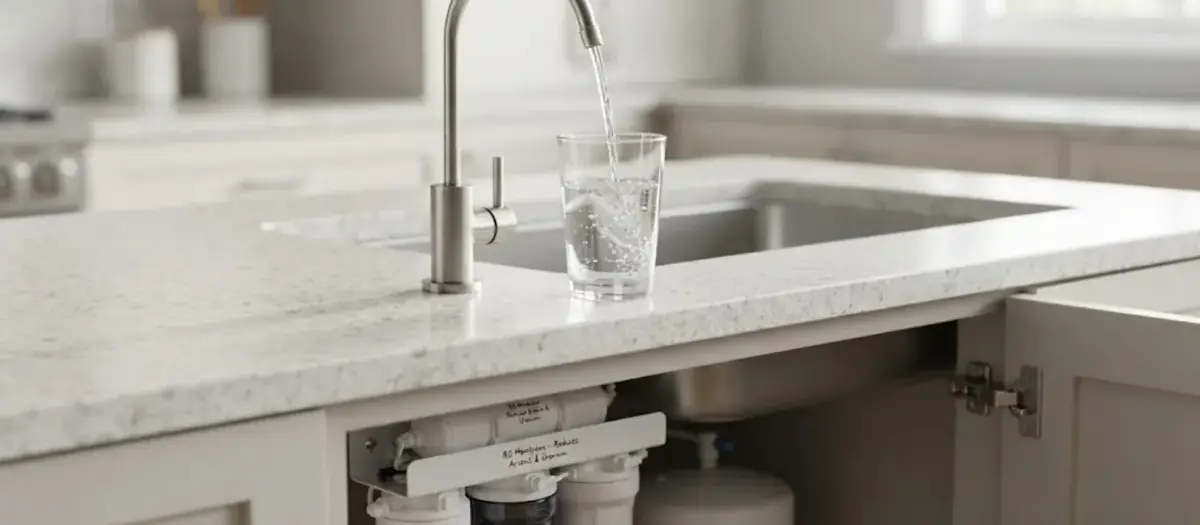
- Under-sink reverse osmosisFurther purifies drinking and cooking water.
- Showerhead filterReduces chlorine at the shower.
- Refrigerator filterHandled by the appliance.
Choosing for a condo
| Goal | Option | Condo friendly. |
|---|---|---|
| Better taste | Carbon filter at the kitchen sink | Yes. |
| Pure drinking water | Under-sink RO | Yes, needs a drain tap. |
| Soft water for the whole unit | Softener | Needs association approval. |
| Shower comfort | Showerhead filter | Yes. |
Chloramine and what it means for taste
Chloramine, the disinfectant in local water, averaged 3.7 ppm in 2025, within the 4 ppm limit. Many carbon filters reduce its taste, but chloramine is harder to remove than chlorine, so check the filter's specifications.
If you keep fish, note that chloramine affects them. Use a conditioner made for it.
Ask your association first
Condo plumbing runs through shared walls and stacks. Adding a device that taps into pipes may need approval. Ask the association what is allowed, who is responsible for leaks and whether an owner needs insurance for a device that holds water.
A leak in a unit can damage neighbors, so use a licensed plumber and a pan or leak sensor.
Installation points
An under-sink filter connects to the cold line with a small adapter. An RO system also needs a drain connection. We install a shutoff, fit the filter and run water to flush it before you drink.
Learn more on our water treatment page and plumbing installation page.
Maintenance
Replace filter cartridges on the schedule the maker gives. A neglected filter can reduce flow and stop working. Mark your calendar the day you install.
Understanding what a filter can and cannot do
A filter is rated for specific contaminants. Carbon reduces chlorine and some organic compounds. A sediment filter catches particles. Reverse osmosis membranes remove a wide set of dissolved substances but waste some water and need a drain.
Marketing for filters can sound alike. Look for the standard the maker claims, such as an NSF/ANSI certification for the specific contaminant you care about, and read what exactly is listed. A filter certified for taste does not automatically address other substances.
Condo specific details to confirm
- Shutoff locationKnow which valve controls your unit and whether it is in your space.
- Floor protectionPlace a leak sensor or tray under the filter.
- Drain connectionAn RO unit needs an approved drain tie-in.
- Association rulesSome buildings require notice before plumbing changes.
- NoiseWater hammer in shared walls can annoy neighbors, so install an arrestor if needed.
Where to find the facts for your building
Your building may purchase water through a master meter or through individual meters. Ask management who supplies the water and request the latest utility report. Seacoast Utility Authority posts its yearly report, and the building manager may keep a copy on file.
If your condo has an old shared riser, ask whether any repiping is planned. Pipe age in the walls matters more to your tap quality than the filter under your sink.
A realistic way to choose
Start with the complaint. If the water tastes of chlorine or chloramine, try a carbon filter first because it is the cheapest step. If you want the cleanest drinking water, add an under-sink reverse osmosis system for the tap you use for drinking and cooking.
Skip whole-unit treatment unless you have a tested reason. A softener or heavy filter in a condo adds cost, uses space and needs the association's consent, and the local utility already treats its water with membranes before it reaches your meter.
Maintenance schedule
Write the install date on the filter housing and set a reminder for the replacement. Cartridges that stay in too long lose effectiveness and can reduce flow. Reverse osmosis systems have several stages with different change intervals, and the membrane may last years while the prefilters need changing more often.
Sanitize the housing when you change cartridges, using the maker's instructions. A small tray under the housing and a leak alarm cost little and protect the neighbor below.
Quick answers
Only with approval, since it ties into shared plumbing.
For drinking water, many people like it.
The water is already membrane treated. Filters are about taste preference.
A licensed plumber is wise.
As the maker directs, often every six to twelve months.
Its 2025 report does not list a hardness figure. Ask the utility or test your own tap.